The earliest surviving written record of whisky in Scotland appears in the Exchequer Rolls of 1494, where a monk named John Cor of Lindores Abbey is granted eight bolls of malt with which to make aqua vitae — the water of life. That single line, buried in the accounts of the royal treasury, marks the point at which Scotland's distilling tradition first enters the historical record. It almost certainly reflects a practice already well established in the monastic orders, borrowed and adapted from continental Europe.
Distillation spread from monastic cells to farmsteads over the following centuries, becoming a domestic craft. By the 17th and 18th centuries, the Highlands were peppered with small stills, most of them operating outside the reach of the Excise. Successive attempts by the Westminster Parliament to tax the trade only drove distilling underground, and smuggling became a way of life along the drove roads and glens.
The turning point came with the Excise Act of 1823, which reduced duties, simplified licensing and made legal distilling economically viable. Within a decade, hundreds of new distilleries had been established. The industry that emerged in the middle of the 19th century was recognisably modern in scale and structure.
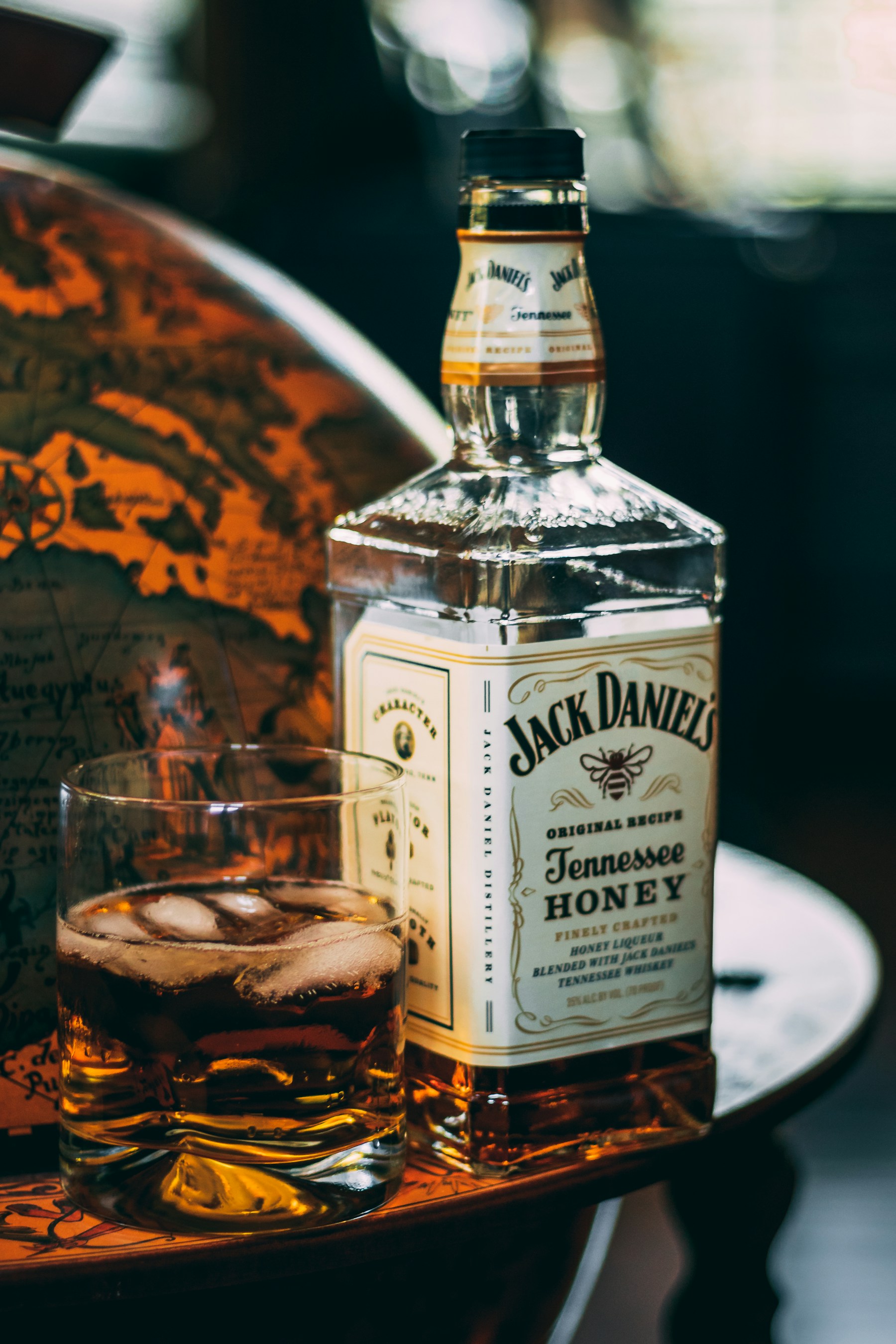
The water of life, once carried in stoneware jars along the drove roads, now travels the world in glass.
The Victorian era brought two further transformations. The invention of the continuous or column still by Robert Stein in 1827 and its refinement by Aeneas Coffey in 1830 opened the way to grain whisky produced at industrial volumes. The subsequent art of blending — pioneered by figures such as Andrew Usher, John Walker and James Chivas — produced a lighter, more consistent style of Scotch that could travel and appeal to an international audience.
The phylloxera epidemic that devastated French vineyards in the 1870s and 1880s created a gap in the global market for spirits. Blended Scotch stepped into it, and by the close of the century Scotch whisky had become a global commodity. Great firms rose on the strength of the export trade.
The 20th century was less kind. Two world wars, American Prohibition, the Great Depression and shifts in consumer taste led to closures and consolidation. By the 1970s many distilleries had fallen silent, and the industry entered what came to be known as the whisky loch — a surplus of matured stock with too few buyers.
The story turned again in the 1980s and 1990s with the rise of single malt Scotch as a category unto itself. Diageo's Classic Malts selection of 1988 gave a fresh identity to individual distilleries that had long been treated primarily as suppliers to blenders. Since then, single malt has grown into a global cultural phenomenon, and Scotland's distilleries — many centuries old, some newly established — have entered a period of extraordinary vitality.